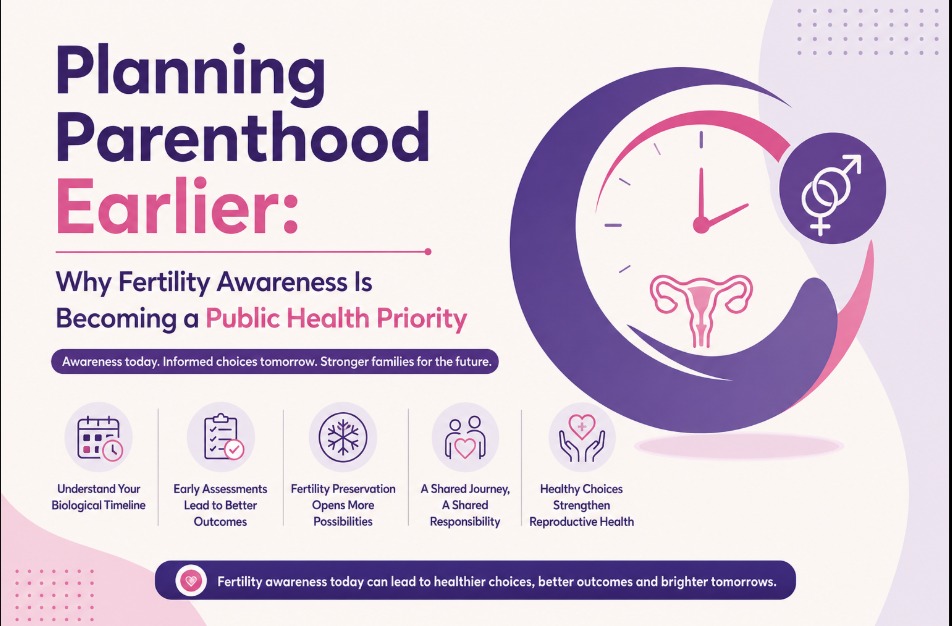
Planning Parenthood Earlier: Why Fertility Awareness Is Becoming a Public Health Priority


For many people, fertility becomes a topic of conversation only after they begin trying to conceive. By then, age-related fertility decline or underlying reproductive conditions may already be affecting the chances of natural conception.
Medical experts believe this needs to change.
As lifestyles evolve and individuals increasingly delay marriage and parenthood for education, career progression or personal aspirations, fertility awareness is emerging as an essential aspect of preventive healthcare. Rather than focusing solely on infertility treatment, specialists are encouraging earlier conversations around reproductive health, fertility preservation and informed family planning.
Unlike many other aspects of health, fertility has a biological timeline that affects both women and men. Female fertility gradually declines with age, particularly after the mid-thirties, while male fertility can also be influenced by advancing age, lifestyle factors and medical conditions.
Despite growing awareness, misconceptions remain widespread. Many individuals assume IVF can overcome every fertility challenge regardless of age. While assisted reproductive technologies have significantly expanded treatment options, success rates continue to depend on several biological factors, making early consultation increasingly valuable.
Routine fertility assessments, reproductive counselling and fertility preservation options such as egg freezing are helping individuals take a more proactive approach towards future family planning. These conversations are particularly relevant for people delaying parenthood, cancer patients undergoing treatment or individuals with known reproductive disorders.
Dr. Hrishikesh Pai, one of India’s most experienced fertility specialists, has consistently advocated greater awareness about reproductive health alongside advances in assisted reproductive technology. As Founder and Medical Director of Bloom IVF Group, he believes education is one of the most effective ways to improve reproductive outcomes and reduce the emotional burden associated with infertility.
“One of the biggest challenges in reproductive medicine is that many people become aware of fertility only when they are ready to start a family. Fertility awareness should begin much earlier. Understanding reproductive health, age-related fertility changes and preservation options empowers individuals to make informed choices rather than reactive decisions.” Dr. Hrishikesh Pai, Global IVF Leader
Public awareness campaigns, workplace fertility benefits and increasing conversations around reproductive wellness are gradually reducing the stigma surrounding infertility. Fertility is no longer viewed solely as a women’s issue but as an important aspect of overall health that affects couples together.
Healthcare professionals also emphasise the importance of healthy lifestyles, including balanced nutrition, regular exercise, adequate sleep and avoiding smoking and excessive alcohol consumption, all of which contribute to reproductive health.
As India continues to witness rapid social and demographic changes, fertility education will become increasingly important. Empowering individuals with knowledge before fertility becomes a challenge can improve outcomes, reduce emotional stress and enable families to make reproductive decisions with greater confidence.
The future of fertility care lies not only in advanced treatment but also in informed choices and those choices begin with awareness.
About Author